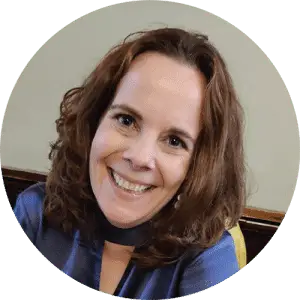
Penny Wills joined the Evaluate team through its acquisition of J+D Forecasting at the start of 2024. As a seasoned forecasting implementation expert, Penny’s role encompasses working closely with clients to understand their requirements for their forecasting models and ensuring successful delivery by working with stakeholders across the team. I grabbed some time with Penny to learn about her journey in the forecasting world, her experiences as a patient, and deadlifting goals…
What do you think is the most common mistake that pharma companies make?
I feel pharmaceutical companies can sometimes lose sight of patients once a medication has been commercialised and in the market for a number of years. One of the most powerful things that a pharma company can do is have employees attend patient groups and present feedback to the business. Also having patients come into the business and tell their story with the medication and challenges they face, allows for open discussions. Some teams in a company may not feel connected with the patients in the work that they do but understanding how you fit into a bigger picture and the improvements made to patients’ lives can embed a sense of meaning to their work. It also benefits the patients as it helps them to have their opinion, feelings and ideas heard without it being filtered and passed through multiple channels.
Which areas of the industry are you most fascinated by?
I love medical technology and the benefits patients have when access is provided or systems are developed to identify medical conditions. I’m a type 1 diabetic and in 2022 after over 20 years of MDI (multiple daily injections) I was able to move onto an insulin pump which has dramatically improved my life in terms of managing my disease and allowing me to go through a day without constantly focusing on it.
There are future developments with wearable devices where they will be able to monitor for signs of strokes and heart attacks, the technology out there in forms of smart watches and bands but they currently require regular recalibration can’t yet be used as an accurate medical device. Rapid development is ongoing and it’s now being driven by patients’ feedback and needs and patients are actively becoming more involved in future tech and want to analyse their health in a much greater detail.
How did you end up working in this industry?
In 2008 I saw a role for an analyst at a pharma company. As a patient I was curious about the pharma market and wanted to learn more about the commercial side. The more I learnt about pharma, the more I knew it was the right place for me and somewhere I could use my skillsets of improving, redeveloping and automating systems, processes, reporting and forecasting. I’ve always joked that I’m driven by laziness, but really if I see a heavy manual process that could be improved I will see what can be done.
I am very passionate about ensuring patients have access to the medications they need and I try to support that road by ensuring pharmaceutical companies can use systems to forecast and track their products effectively and therefore have more time to focus on understanding the patients’ needs and requirements for future developments. Otherwise, why are we all in this industry? It’s why Norstella’s “pipeline to patient” mission really resonates with me.
What’s your favourite industry conference or event?
I attended my first Women in Data event last year and it was absolutely fantastic. I met Dame Stephanie (Steve) Shirley CH who is an incredible and inspiring lady who pioneered a software business in the UK in 1962 called “Freelance Programmers” and it was staffed by women working from home. 297 of the first 300 staff were women and at a time when women couldn’t open a bank account without a husbands’ permission. In order to promote her business all of her correspondence to potential clients were signed by “Steve” at her husband’s suggestion because her original letters signed as “Stephanie” were ignored. She has been called Steve ever since and went on to establish “The Shirley Foundation” which is one of the top grant-giving organisations in the UK.
What really irritates you?
I believe that the way we grow as both employees and leaders is to share the knowledge and learn from each other. So I find it frustrating when people in business who have great knowledge or skillsets about a process or system don’t share. Everyone benefits from sharing best practice and ideas and looking for improvements, and I have been very lucky to see that my openness to share has been passed on. I’ve shown people a trick or an automation and they’ve gone away and turned it into something much bigger and more impactful and they’ve shared their new skillset and knowledge on with colleagues and my heart has swelled.
Tell us an interesting fact about yourself
Growing up I idolised strong women and I wanted to be as strong as Olympic athletes like Fatima Whitbred and the female contestants from Gladiators. At 17 I joined my dad and uncle at the gym doing weight training with them until my late 20’s and rekindled my passion for lifting in my 40’s. I had bursitis in both shoulders during lockdown and my goal coming out of lockdown was to deadlift more than my current 95kg post bursitis and then beyond 100kg.